Altea
Premium, cultural and calm — the white old town, the church plaza and a slow seafront paseo set the tone.

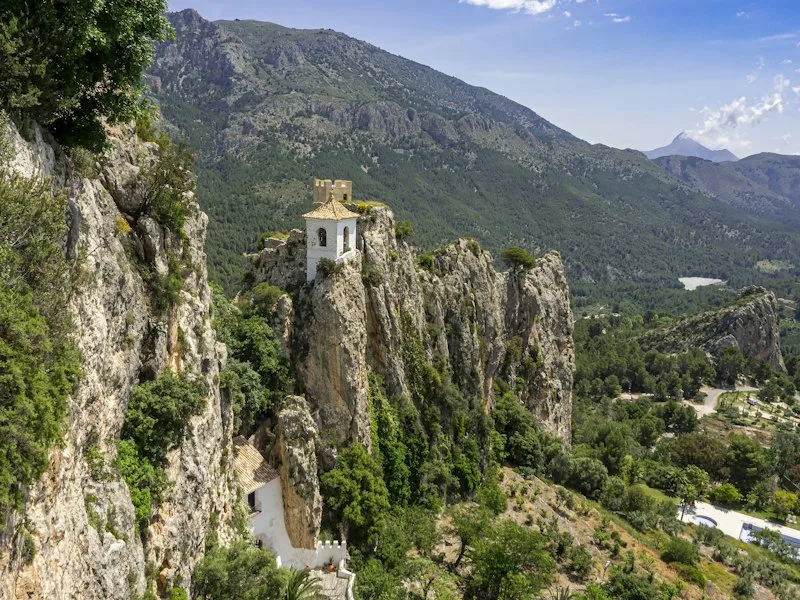
Polop · Area guide
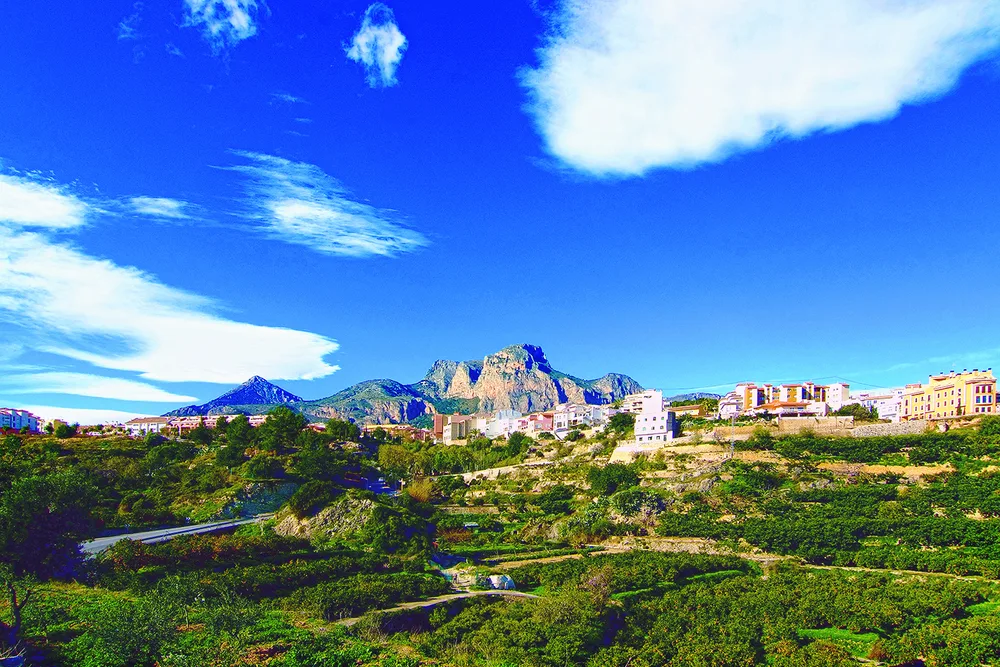
A historic hilltop town at the foot of the Ponoig, new-build clusters with mountain and sometimes sea views, and a quiet rural edge — Polop is not a beach market but a market at the edge of the mountains, with the coast and Benidorm within easy reach.
Geographic scope
Polop sits inland in the central Marina Baixa, close to Benidorm but without a coastline, at the foot of the rugged Ponoig massif. The terrain is steep: the town grew around the castle hill, and the ravines of the Barranco del Salt and the Barranco de Canet de Xirles carry the rainwater away. The usual road approach runs through the Benidorm/La Nucía corridor and the CV-70; buses connect Polop with La Nucía, Benidorm, Callosa and Guadalest. Alicante airport is reached over the same connection — drive times depend on the address and traffic.
The terrain separates the living patterns: a hilltop core of attached traditional houses and apartment blocks; planned new-build clusters — La Alberca, Polop Hills, Bay View/Balcón de Ponoig — where the house buys views, garden and pool; established outer urbanisations around PAU 1 with modern resale; and the rural edge around Xirles/Chirles with fincas and country houses. A buyer looking for a “villa in Polop” almost never looks in the old core; a buyer who wants walkability almost never ends up in the outer urbanisations.
Municipal profile
Verified indicators behind this guide — the composition of the housing stock, the age of the build and the rental framework this market moves on.
For Polop, this site shows no price index and no micro-area rows — every price in this guide is an asking price, not a completed transaction. Portal averages blend unlike stock (the Casco urbano, Xirles, La Alberca, edge schemes) and the “Polop” label can count units that actually sit between Polop and La Nucía; this guide therefore works per environment. The 2021 census counts all dwellings; a platform observatory counted 68 active tourist dwellings in May 2026 against 130 entries in the regional register — a registration and data signal, not a supply census.
Where to buy
You buy Polop by environment, not by municipality. Pick an environment to see what it suits, which asking prices belong there and what to verify.
Walkable year-round village
The municipality’s broadest established apartment market: older traditional houses around the historic core alongside low- and mid-rise blocks from the 2000s and later, with lifts, balconies and terraces. The castle, the Fuente de los Chorros and everyday services sit within walking distance; the older core is a building-by-building proposition — renovation quality, lift, common areas and title differ by address. Detached villas are rare here: the old core is attached village housing.
Planned, villa-led new build
The clearest concentration of planned villa and villa-like new build: detached, semi-detached and compact villa products, completed units and resale of newer homes. Alongside the villas sits a thin, premium apartment fringe — ground-floor homes with private gardens — and the municipality itself names La Alberca as an urbanisation on the formal 2026 rental list. The price buys garden, pool, views and new-build specification; the bill sits in car use and community fees.
Gated, resort-style new build
A named residential cluster at the foot of Monte Ponoig, around the Polop Hills and Polop Hills Nature projects: contemporary homes marketed around mountain and sea views, pools, gardens, shared amenities, security and energy features. The supply is villa- and townhouse-led — anyone expecting a conventional apartment block is looking for the wrong product. The name is marketing: the binding planning and cadastral category is checked per address, not via the project label.
Modern view villas
A distinct modern view cluster around the Balcón de Ponoig address on the outer edge: newer villa-style homes with terraces, solariums, parking, gardens and optional private water. The orientation buys mountain views and, where the position allows, sea views — plus hillside questions: access, retaining walls and drainage deserve more attention here than on a flat suburban plot. Verify the exact legal urbanisation and cadastral zone rather than trusting the marketing name.
Established modern resale
The market for modern resale and larger detached homes outside the new-build clusters: completed development stock, resale villas and homes with private pools, with mountain views as a recurring plus. PAU 1 sits on the formal exterior-urbanisation list of the 2026 ordinance, so its exact planning category matters directly for rental due diligence. La Teulería, La Paz, Sector 2 and Sector 3 are legally relevant zones too — do not assume they carry the same stock and amenities as La Alberca.
Quiet, rural and lowest entry
Its own hamlet rather than a generic edge of Polop: older detached houses, country homes and fincas, alongside low-rise apartments — including flats of ±65–70 m² without lifts, often with terrace, garage or storage. Asking examples for resale sit around ±€101,500–€175,000, and walking routes through the ravines around the hamlet give the place a genuine outdoor character. Supply is thin and checking heavier: access, land classification, outbuildings and utility documentation need extra scrutiny.
Market & buyer fit
Families who want bedrooms, terraces, a pool and outdoor space rather than a compact apartment.
Couples and retired or semi-retired buyers who want a quieter, greener life at the edge of the mountains, within reach of the Marina Baixa’s larger coastal centres.
Second-home buyers who want a modern, low-maintenance scheme or a private villa with views and are comfortable planning around a car.
Buyers who want a base for walking, climbing, cycling and inland excursions — with the coast and Benidorm as destinations rather than the doorstep.
Entry-level buyers who want mountain-village character and a low asking price — flats in the Casco urbano or Xirles — instead of a beach product.
Part-year owners able and willing to budget for pool, garden, security and insurance upkeep while they are away.
Buyers who want a walk-to-the-beach address or a genuinely coastal setting — Polop has no coastline.
Buyers who need to function daily without a car, especially in the outer urbanisations.
Buyers counting on a guaranteed tourist-rental income — the cap, the zones and the community decide, not the view.
Buyers who want a fully finished, legally uncomplicated home without time for Spanish planning and registry checks.
Buyers who want a flat, low-maintenance garden with no slopes, retaining walls, pool equipment or drainage to manage.
Apartment buyers expecting a wide choice of modern blocks — Polop’s visible new build is villa- and townhouse-led.
Snapshot
Polop sits outside the site’s four screening zones and the asking-price report has no micro-area rows here, so orientation works with asking-price ranges per environment: new-build villas from the high €400ks and mostly €550k–€800k, flats in the old town at ±€145k–€295k and entry-level Xirles at ±€101.5k–€175k. Asking prices, not transactions.
Local conditions
Three conditions decide what you actually buy in Polop: the mountain terrain, the year-round character of the village and the 2026 tourist-rental regime.
Polop sits inland at the foot of the Ponoig, with steep slopes and ravines — the Barranco del Salt and the Barranco de Canet de Xirles carry the rainwater away. The road approach runs through the Benidorm/La Nucía corridor and the CV-70; buses run to La Nucía, Benidorm, Callosa and Guadalest, but for the outer urbanisations, the beach and major shopping the car remains the practical default. Drive times depend on address and traffic: test the last road, not just the distance.
Polop works year-round: a health centre on Avenida Sagi Barba (out of hours, urgent care falls to the La Nucía consultorio), a pharmacy, a school, a post office and a culture house. Winters are quiet — pleasant for permanent living, less so for owners expecting holiday activity all year. Test the house in winter: heating, damp, internet, and whether the slope and the access road stay passable in wet weeks.
The planning framework is layered: the 1988 Plan General, a consolidated planning text (January 2023) and separate documents per sector — Casco Antiguo, Xirles, La Alberca, PAU and more. The tourist-use ordinance (definitive, May 2026) bans tourist dwellings (VUT) in the historic core and the protected BIC surroundings, keeps the ensanche (the expansion belt around the core) restrictive and sets a 15% dwelling cap for the exterior urbanisations — with La Teulería, La Paz, La Alberca, PAU 1, Sector 2 and Sector 3 as the formal list. A building licence is not a rental licence; request planning compatibility for each cadastral reference.
Buyer issues
These issues recur in Polop — each can be checked at address level before signing, not after.
Underbuilds, enclosed terraces, garages, guest rooms, pergolas and storage areas appear in marketing but not one-to-one in the Registry, Cadastre and planning file. The risk is greater in older resale and rural stock, but even a brand-new home needs verification. This affects price comparison, finance, insurance and rental.
Pools, roof terraces, shade structures, extensions and slope works shape value and rental use. That an element has stood for years or photographs well is no proof: ask for the licence and the planning record and have position, boundary distances and drainage checked against the cadastral parcel.
“Polop Hills”, “Balcón de Ponoig” or “La Nucía Hills” are search and lifestyle labels; the binding answer lies in the cadastral address, the planning zone, the title and the municipal records. Polop’s planning framework is layered — the 1988 Plan General, modifications, sector plans and a consolidated text — so status differs address by address.
Especially for new builds, converted spaces and older homes that changed hands several times, the first-occupancy licence, completion documents or utility-connection paperwork can be missing. Polop publishes dedicated procedures for these; request them as a dossier, not after the fact.
A house can be dry and photogenic on viewing day and still suffer from drainage, damp, runoff from higher plots or hillside movement. Check the exact parcel against the flood maps (PATRICOVA and the national viewer), note the ravines and steep slopes around it and have a professional inspect the whole plot — ideally during or just after a wet period.
A communal pool, a gate, a private road, gardens or security improve the product but bring fees, reserves and rules on alterations, pets, parking and rental. In small schemes with few owners, special assessments can be heavy; tourist use requires express community approval (a three-fifths majority) and certificates where it applies.
A villa or apartment can look ideal for holiday guests and still fail on the zone — the ban in the historic core and BIC surroundings, the 15% cap per exterior urbanisation, the building form, the community or the registration. Valencian registration is time-limited (five years) and a sale restarts the process with a new declaration; the national registration rules were also legally unsettled in 2026. Do the numbers only after a written municipal compatibility declaration.
Villa-like ground-floor homes, duplexes, semi-detached houses and parts of villas turn up in apartment search results. The horizontal division, the title and the cadastral record must confirm what is actually being sold; for schemes “between Polop and La Nucía”, also check whether the address actually sits in the municipality of Polop.
Our advice
Do not buy on a project or lifestyle label: “Polop Hills”, “Balcón de Ponoig” or “La Nucía Hills” says nothing about the planning zone — the cadastral address and the municipal records decide.
Do not count on tourist rental without an address and sector check: the ban in the historic core, the 15% cap, the community and the five-year registration decide, not the photo.
Do not value an underbuild, pool, terrace or garden without a licence and planning record that covers exactly that element.
Do not take advertised floor areas at face value without a measured survey reconciled against the Registry and Cadastre.
Do not underestimate slope, drainage and winter access — the prettiest view locations are exactly where this bites.
Do not take brochure capacity and project marketing as delivered supply; verify completion status, utility connections and which specification (pool, solarium, parking) is actually in the contract.
Frequently asked questions
The questions Dutch buyers ask us about Polop — with the short, verifiable version of each answer.
On the map
Polop lies in the province of Alicante, at the foot of the Sierra Ponoig, a short distance from the Costa Blanca coast.
Browse by location
Each area has its own buyer logic: character, housing stock and entry prices differ.
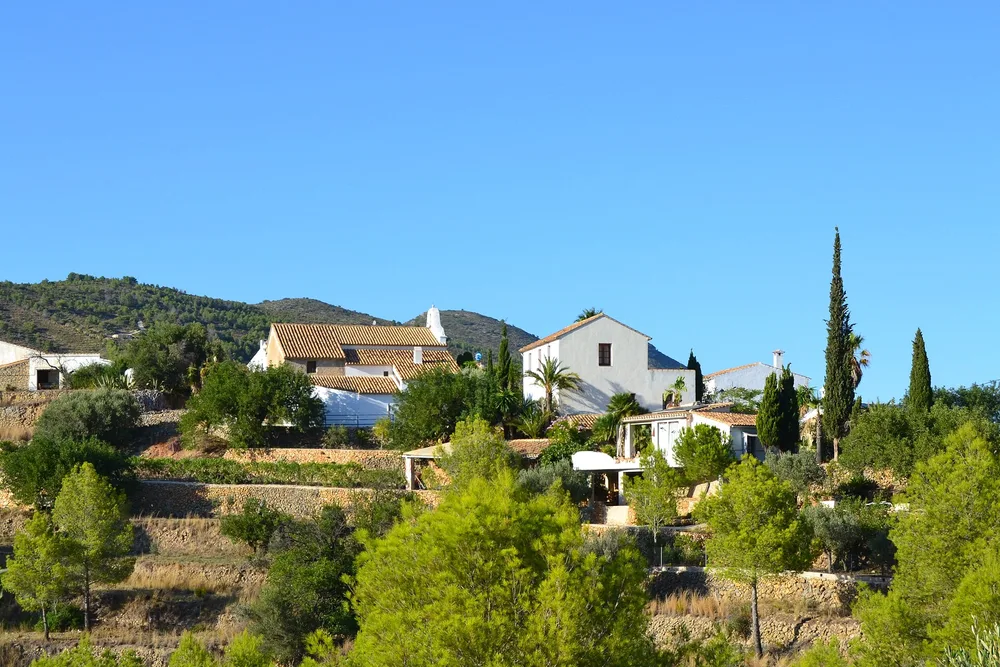
Premium, cultural and calm — the white old town, the church plaza and a slow seafront paseo set the tone.
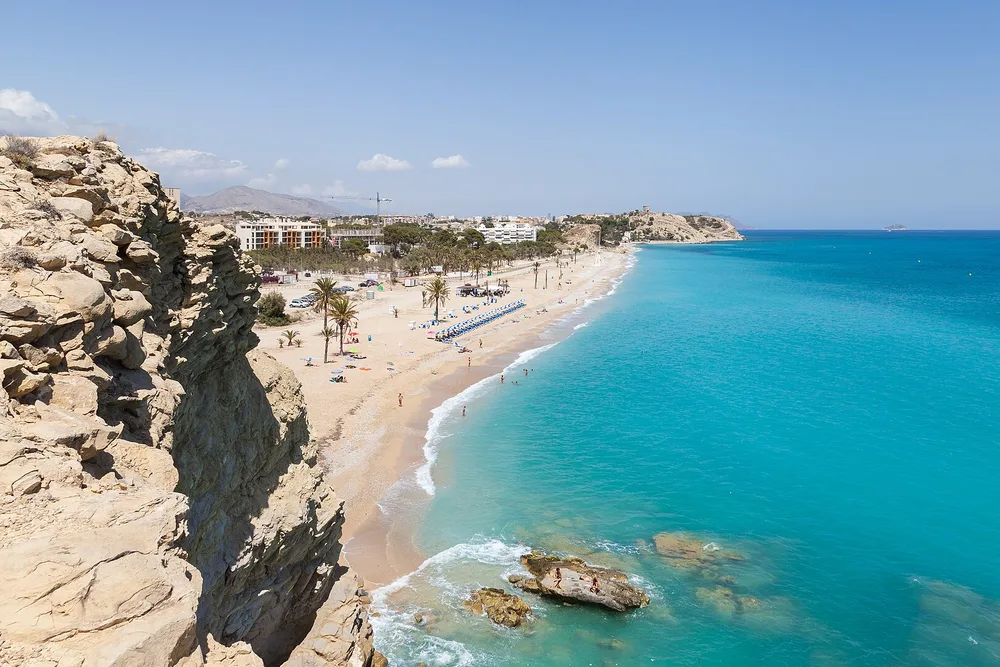
Beach, family and rental appeal — with real seasonality to plan around.
Coast, village and privacy — villa country between Calpe and Moraira.
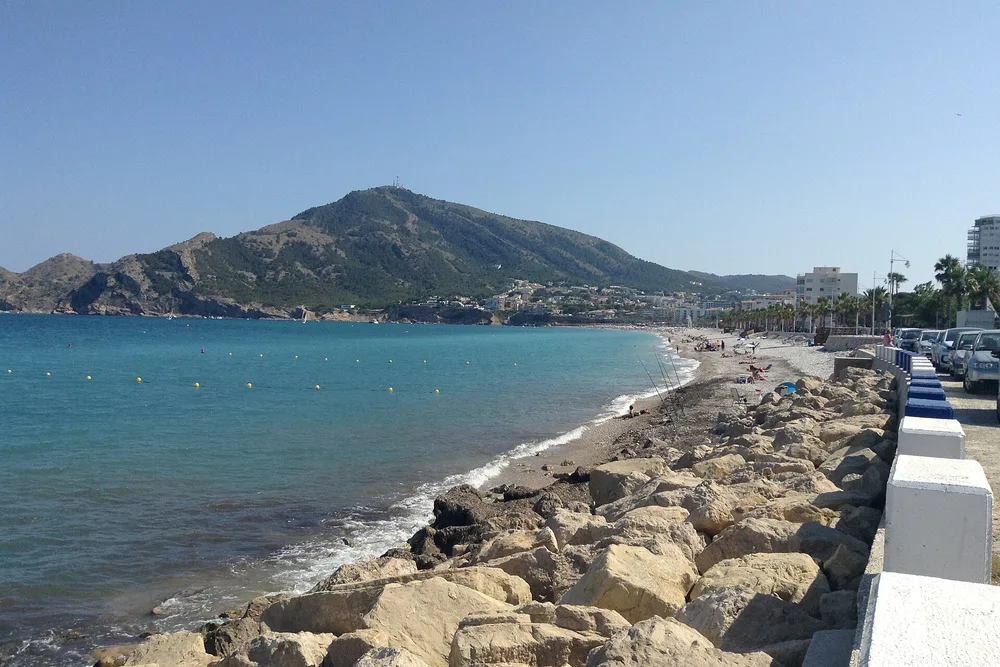
Authentic and emerging — colourful seaside town, lower entry prices.
Residential, sport and family — inland of Altea, good value and facilities.
International, healthcare and permanent living — strong year-round community.
Quiet coastal living between Moraira and Javea, with dramatic clifftop spots.
Premium and varied — port, old town and beach each with their own character.
Port town at the north end of the Costa Blanca, with ferry links and a real working feel.
To the listings
Polop is quietly growing along with its famous neighbours: new-build at the foot of the Ponoig, outer urbanisations such as Xirles, and a village market still priced well below the coast. Every property type that market offers is gathered together in one overview.
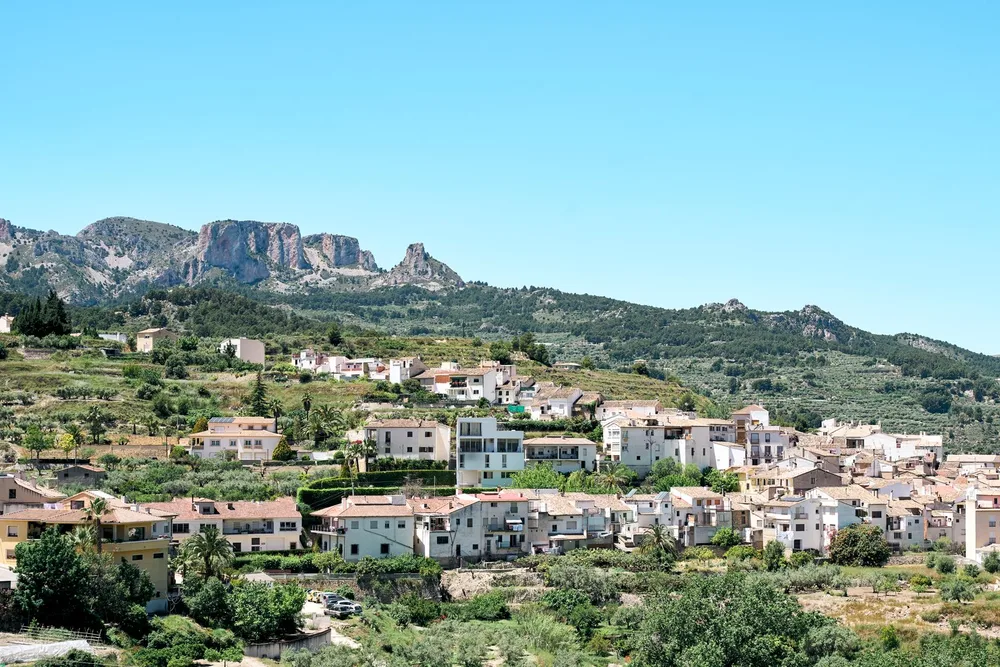
Area guide
The buyer’s guide, market data for all areas on the Costa Blanca North, the mortgage calculator and answers to common questions — everything you need to prepare your purchase, in one place.

The buying process step by step: offer, contract, taxes and due diligence.

Asking prices, trends and screening bands per town — the full market picture across the thirteen towns.

More answers about buying, taxes and ownership on the Costa Blanca.
Estimate your monthly mortgage costs before you shortlist.
Looking for a property on the Costa Blanca? Tell us what you’re looking for, and our team will get back to you shortly.