Altea
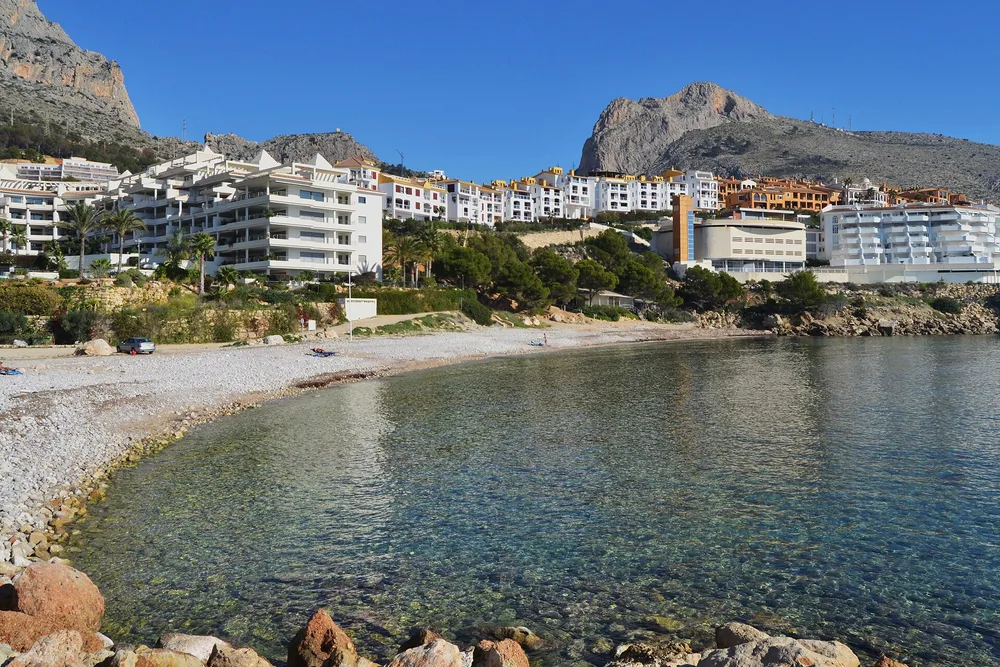
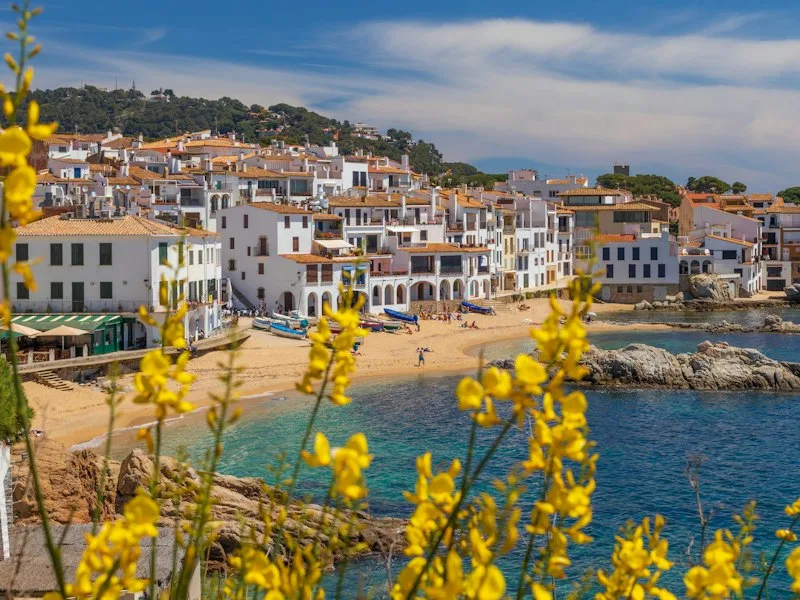
Premium, cultural and calm — the white old town, the church plaza and a slow seafront paseo set the tone.

Alfaz del Pi · Area guide
A town set just inland with its own coastal nucleus: L’Albir delivers the beach, the promenade and the Serra Gelada ridge, the urbanisations around the pueblo deliver garden, pool and quiet — Alfaz del Pi is several markets at once.
Geographic scope
Alfaz del Pi sits on the northern Costa Blanca, in the Marina Baixa between Benidorm and Altea. The municipality consists of the inland town, a dispersed network of urbanisations and the coastal nucleus of L’Albir in the bay beneath the Serra Gelada — the natural park (since 2005, ±5,564 hectares, 88% marine) whose cliffs rise above L’Albir’s beach. The AP-7 and N-332 carry regional traffic; Alicante is ±50 km away and Alicante-Elche airport is the international gateway.
The official urban profile distinguishes central, north-western and coastal morphologies, with l’Alfàs del Pi — the official, Valencian name — and Playa de l’Albir as the two principal nuclei. That geography explains the market: apartments live in L’Albir and around the pueblo, villas and large plots in the dispersed urbanisations such as Foia Blanca, El Planet, Jardín de Alfaz and elevated Colonia Escandinavia–Cautivador. Coast and inland are not two prices but two living patterns — and a villa buyer rarely looks on the promenade.
Municipal profile
Verified indicators behind this guide — the asking-price index, the screening band and the demographic base this market runs on.
All prices are asking prices, not completed transactions. The municipal average hides the spread: in August 2026 the coastal nucleus of L’Albir stood at €3,605/m², against €3,128/m² municipality-wide; both sit above the provincial average of €2,759/m². The 2021 census counts all dwellings — 7,941 primary and 4,785 non-primary; the 1,975 tourist apartments in the municipality’s 2021 offer report describe the destination’s rental stock, not the private housing stock.
Where to buy
You buy Alfaz del Pi by environment, not by municipality: the coastal nucleus, the town, the town-side urbanisations and the elevated inland are different markets. Pick an environment to see what it suits and what to verify.
Walkable beach life
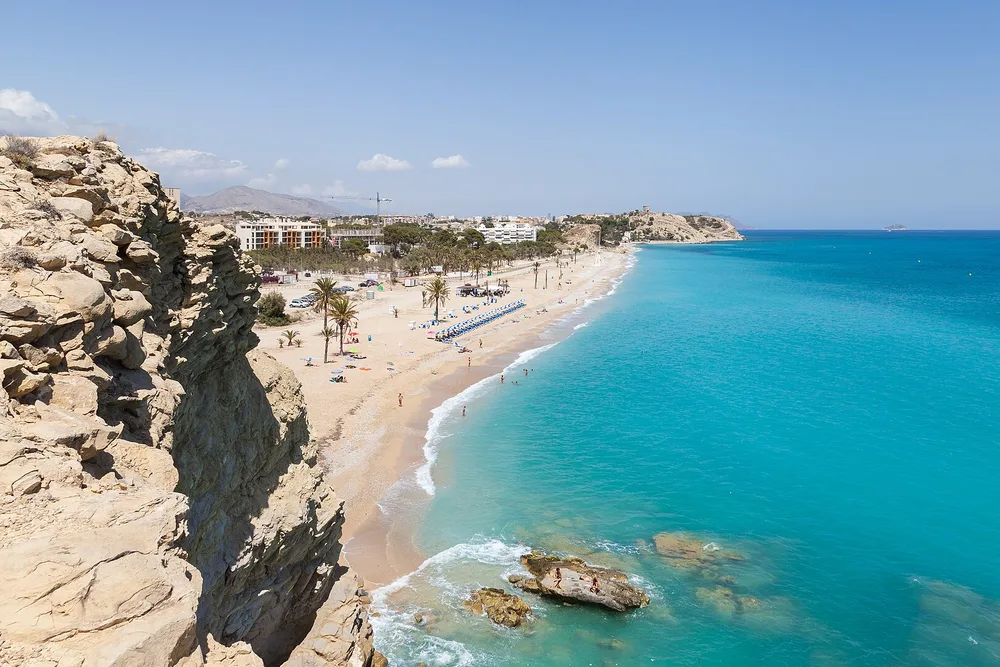
The municipality’s coastal nucleus: a walkable promenade (Paseo de las Estrellas), restaurants, the lighthouse route through the Serra Gelada, and an established stock of apartments, duplexes and smaller flats around the Bulevard dels Musics, with villas on older plots as a limited, land-hungry segment. Most homes here are compact — around 60–75 m² — so the premium buys location and convenience, not square metres. An outlook over the protected ridge is an asset; that outlook is not a building right.
Services, schools, the plaza
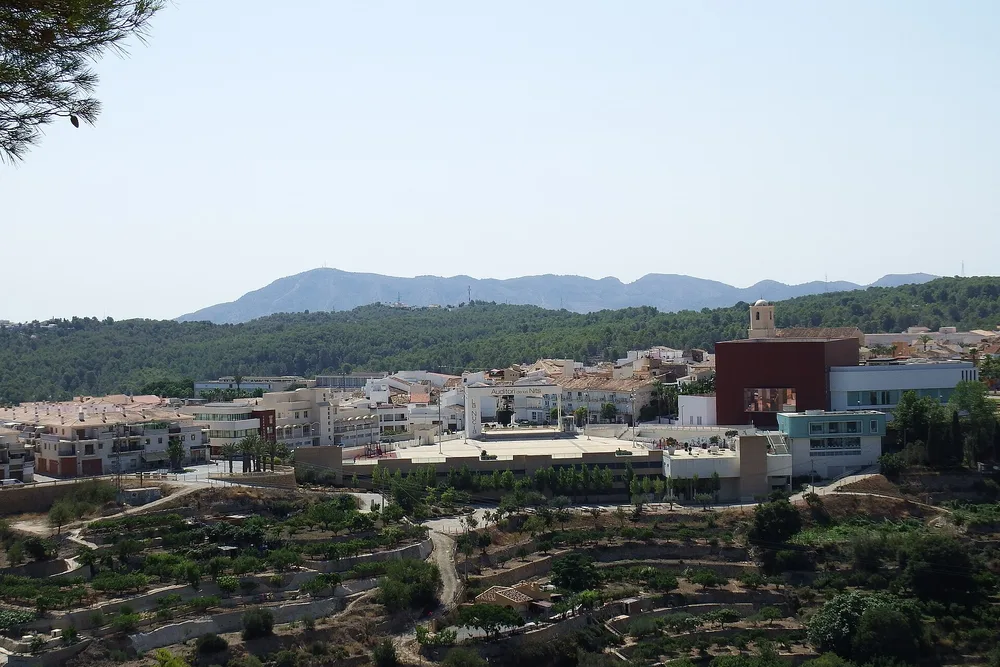
The town proper around the Plaza Mayor: conventional apartment blocks and smaller gated communities, usually with two or three bedrooms, a lift and a communal pool, around everyday services, schools and the Casa de Cultura. The stock is older than the coast’s and the market visibly offers renovation properties; here you buy year-round practicality instead of beach-walk access. Test build year, lift, parking and the community’s finances.
Villas around the town
The town-side urbanisations where the municipality concentrates its detached housing: traditional Mediterranean houses, villas on generous plots, renovated homes and occasionally a development opportunity. The stock is mostly post-1990, with the 2000–2009 building wave as its centre of gravity. Some houses stay within reach of shops and schools, others turn car-dependent quickly; the last road, the sewerage and the water pressure often make the difference between two homes under the same district name.
Privacy and guest space
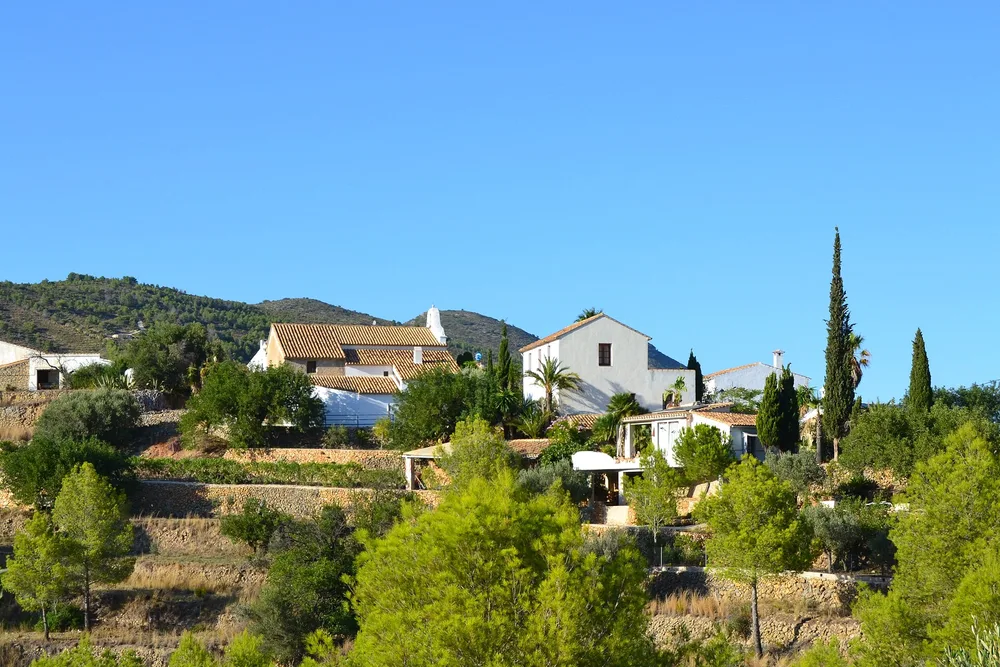
The quiet, scattered corner for larger and more secluded detached homes: a mix of traditional houses, turn-of-the-century villas and renovations, often with underbuilds, extra kitchens or independent guest accommodation. Advertised examples for substantial villas run from circa €440,000 to circa €850,000, with larger renovated or multigenerational homes above €1 million — examples, not averages. Here more than anywhere, the purchase stands or falls on the legality of what was built over the years.
Villas, views and new build
The elevated inland around the international Scandinavian school community: villas on larger plots with open views and room for guest accommodation, alongside resort-style apartment complexes and the municipality’s most visible new-build pipeline — Alfaz Essence (123 homes) is the example. The premium here sits in privacy, land and outlook, not walkability; slope, access roads and utilities decide what a house is worth, street by street.
A small, irregular supply
The rural edge where quiet, views and land are the product and supply stays small and irregular. The apparent value of extra land or an outbuilding can be undone by planning questions: the outdated 1987 PGOU status, legal access, water and sewerage, and a check against the flood maps (PATRICOVA, SNCZI) and the protected edges of the ravines and the Serra Gelada.
Market & buyer fit
Buyers who want beach, restaurants and walking routes within walking distance and will pay for the L’Albir package.
Second-home buyers who value a garden, a private pool and outdoor living over shared amenities.
Families and multigenerational buyers looking for space and an independent guest unit — provided that unit is checked against title and registration.
Retired or semi-retired and long-stay buyers who want a municipality with a large Norwegian and Dutch community and year-round services.
Buyers who want to compare the coastal premium with roomier new-build and terrace product inland, such as around Escandinavia–Cautivador.
Selective rental buyers who have the tourist regime verified at address level before they do the maths.
Buyers who need to walk to shops, school and beach every day — the elevated, dispersed urbanisations do not work without a car.
Buyers counting on guaranteed tourist-rental income — the municipality steers towards whole blocks and complexes and the rules are not standing still.
Buyers whose budget only works if every underbuild, basement or enclosed terrace counts as fully legal floor area.
Buyers who want predictable, communally managed maintenance rather than responsibility for pool, garden, exteriors and security.
Buyers wanting a quiet, year-round home in a complex with heavy holiday use.
Buyers who take a sea or park outlook as a guarantee that the surrounding land will never be built on.
Snapshot
Two instruments side by side: the asking-price index for the municipality and for the coastal nucleus of L’Albir, and the Zone D screening bands to test listings against quickly.
| Property type | Band (asking prices) | Supply |
|---|---|---|
| Standard apartment | €130,000–€400,000 | — |
| Prime apartment / penthouse | €350,000–€1,300,000+ | Broad resale supply in L’Albir, around the town and in Escandinavia–Cautivador; renovation stock is a visible middle segment; new build clusters inland. |
| Townhouses | €220,000–€650,000 | — |
| Villa, resale | €350,000–€1,500,000+ | Resale-led, with turn-of-the-century build years as the recognisable core; renovated villas are the important middle market; new build is a minority on the coast and in premium corners. |
| New-build apartment or villa | €300,000–€1,500,000+ | Visible but concentrated in Escandinavia–Cautivador (Alfaz Essence among others) and a handful of coastal schemes; regional production remains limited. |
| Building plot | €100,000–€550,000+ | Sporadic: development opportunities in the town-side urbanisations and the rural edge; price build rights only after checking the outdated 1987 PGOU status and the flood maps. |
Zone D screening bands (Sep 2026) exist to test listings quickly — they are not an appraisal. The exact location, legal floor area, condition and access can put a specific home well above or below its band.
Local conditions
Three conditions decide what you actually buy in Alfaz del Pi: the municipality’s spread, its international base and its outdated planning framework.
The municipality is not one continuous coastline but a town, a coastal nucleus and a string of dispersed urbanisations. The AP-7 and N-332 carry regional traffic; the CV-753 links town and coast towards Benidorm, with the Camí del Mar and the Camí Vell d’Altea as local coastal connections. TRAM Line 9 has two stops — one for the beach side, one for the old core — but it does not replace the car in the urbanisations. Benidorm’s main bus station sits ±8 km away; Alicante-Elche is the gateway.
The municipality counts 20,710 residents (2023), more than half of them of foreign origin, with established Norwegian and British school and community links and the Netherlands among its core tourism markets. Over 2,300 pupils started the 2026–27 school year at its public schools; L’Albir adds the lighthouse (built 1863, restored 2011), the Roman Villa and the walking routes through the Serra Gelada. Test the house in winter: heating, damp, internet, and whether the services around you stay open out of season.
The planning framework is the outdated 1987 PGOU, whose revision lags — parcels need current, parcel-specific checks rather than trust in an urbanisation’s name. Around water and risk the municipality is moving: in 2026 it announced water-supply works and a new water and sanitation contract, and urban rainwater capture and flood prevention stand as planning priorities in its tourism strategy. Check classification, connections and the PATRICOVA and SNCZI maps for every parcel — and, at the edge of the Serra Gelada, the protected status too (a park since 2005, ±5,564 hectares).
Buyer issues
These issues recur in Alfaz del Pi — each can be checked at address level before signing, not after.
Enclosed terraces, garages, underbuilds, storage rooms and parking spaces appear in the marketing, but not one-to-one in the Registry, the Cadastre and the planning file. This affects price comparison, finance, insurance and tourist registration — reconcile the registry, cadastral data and a measured survey.
A lower floor with a kitchen, bathroom and its own entrance does not prove that the space was approved as an independent, habitable dwelling. Value it as a legal apartment only after checking the title, the cadastral record and municipal approval.
A villa can be in order while a later pool enclosure, terrace extension or outbuilding is not. Photographs and listing text are no substitute for municipal permits, completion documents or a planning certificate — check every item of external works separately.
The municipal plan is outdated and its revision has been delayed; every urbanisation has its own access, infrastructure and planning context. Check the exact parcel — classification, buildability and any enforcement proceedings — and do not rely on the district’s name or the agent’s description.
Private or partly self-managed roads, drainage, sewerage, water pressure, electricity capacity, fibre and street lighting vary from one urbanisation to the next. Confirm who maintains the road and whether levies or planned works are outstanding — it affects year-round use and resale demand.
Elevated and rural parcels can run into the PATRICOVA and SNCZI flood maps, plus erosion, drainage routes and the protected edges of the ravines and the Serra Gelada. A flag on the map calls for professional interpretation; a clean map is no substitute for a visit after heavy rain.
Under Valencian Decree-Law 9/2024, a tourist-use dwelling is the whole home — not room by room — with a favourable municipal compatibility report, its own cadastral reference and time-limited registration. The municipality has been steering use towards whole blocks or complexes rather than isolated apartments, and since 3 April 2025 the community can limit or block tourist activity with a three-fifths majority. Verify the exact address before you do the numbers.
Pools, lifts, façades, roofs and access roads pay their way in monthly fees and sometimes special levies; coastal blocks add salt, damp and maintenance. Ask for the statutes, three years of accounts and minutes and planned works — and view outside the high season, because a lively August impression hides winter noise levels, parking pressure and the building’s true condition.
Our advice
Do not buy on a neighbourhood name: “Colonia Escandinavia” or “El Cautivador” covers different stock, access and legality street by street.
Do not count on tourist rental without written verification: the compatibility report, registration, the current municipal ordinance and the community’s three-fifths position decide.
Do not take advertised floor areas at face value without a measured survey reconciled against the Registry and the Cadastre.
Do not value an underbuild, guest apartment or plot on age or an agent’s claim — only documents count.
Do not underestimate how car-dependent the elevated urbanisations are: the TRAM serves two stops, not every villa district.
Do not take a Serra Gelada outlook as a build or development right; have classification, PATRICOVA/SNCZI and protected status checked for the exact parcel.
Frequently asked questions
The questions Dutch buyers ask us about Alfaz del Pi — with the short, verifiable version of each answer.
On the map
Alfaz del Pi lies on the Costa Blanca in the province of Alicante, between Altea and Benidorm — with L’Albir by the sea.
Browse by location
Each area has its own buyer logic: character, housing stock and entry prices differ.
Premium, cultural and calm — the white old town, the church plaza and a slow seafront paseo set the tone.
Beach, family and rental appeal — with real seasonality to plan around.
Coast, village and privacy — villa country between Calpe and Moraira.
Authentic and emerging — colourful seaside town, lower entry prices.
Residential, sport and family — inland of Altea, good value and facilities.
Inland village with mountain views — more house for the budget, a short drive to the coast.
Quiet coastal living between Moraira and Javea, with dramatic clifftop spots.
Premium and varied — port, old town and beach each with their own character.
Port town at the north end of the Costa Blanca, with ferry links and a real working feel.
To the listings
Albir brings the sea, Alfaz Pueblo the village life; together they form one municipal market at one of the coast’s more moderate price levels. Asking prices per property type show what that level means in practice.
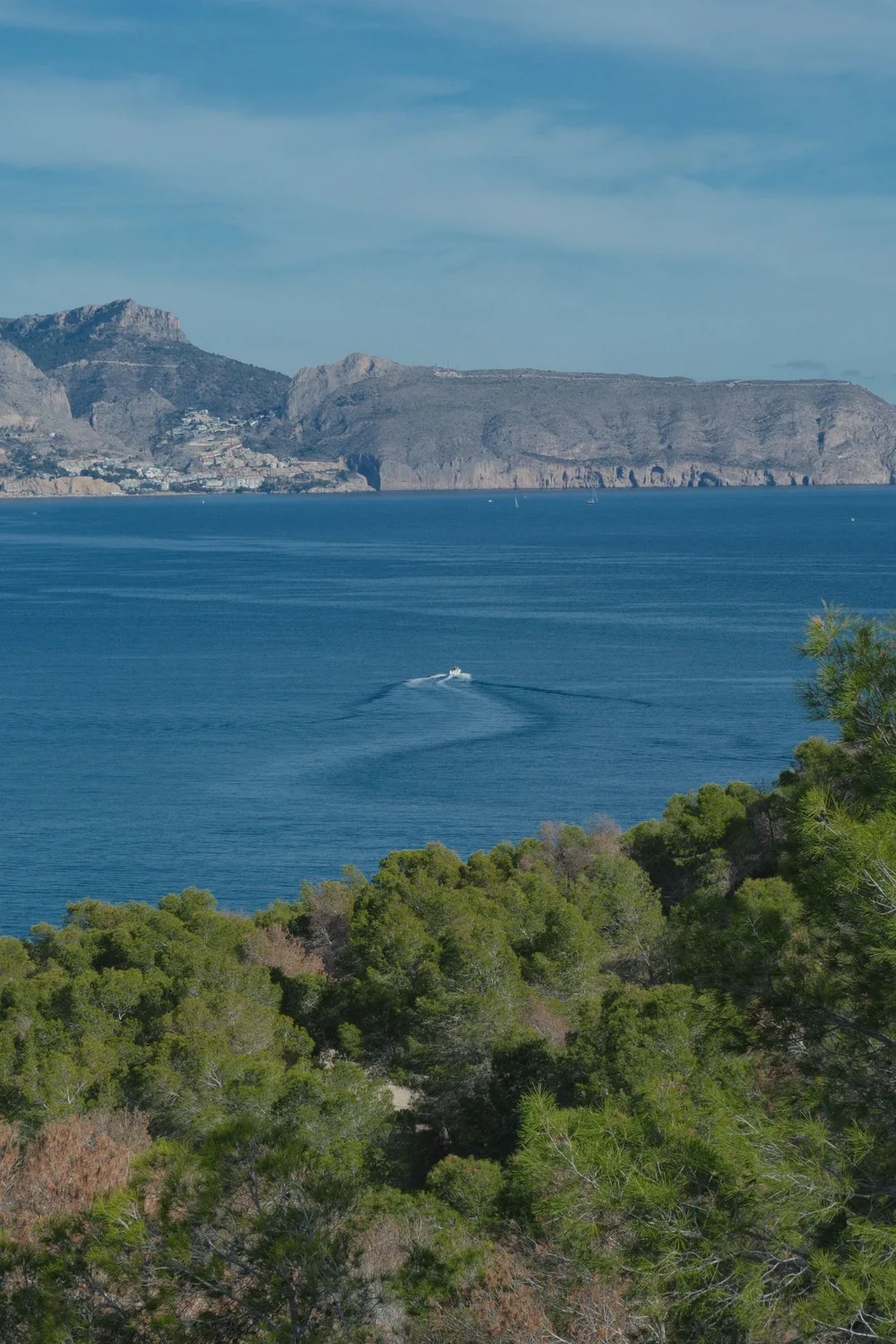
Area guide
The buyer’s guide, market data for all areas on the Costa Blanca North, the mortgage calculator and answers to common questions — everything you need to prepare your purchase, in one place.

The buying process step by step: offer, contract, taxes and due diligence.

Asking prices, trends and screening bands per town — the full market picture across the thirteen towns.

More answers about buying, taxes and ownership on the Costa Blanca.
Estimate your monthly mortgage costs before you shortlist.
Looking for a property on the Costa Blanca? Tell us what you’re looking for, and our team will get back to you shortly.